The DērmBoutique
Microneedling
Collagen induction therapy — performed personally by Dr. Lanier.
Microneedling is one of the most clinically validated treatments in modern aesthetic medicine — and one of the most technique-dependent.
When performed correctly, with the right depth, the right device, and the right hands, it triggers a profound biological renewal that continues working for months after you leave the clinic. At the Dērm Boutique, every microneedling treatment is performed personally by Dr. Brock Lanier — double-board-certified surgeon. Not a technician, an aesthetician, or an assistant. That distinction matters.

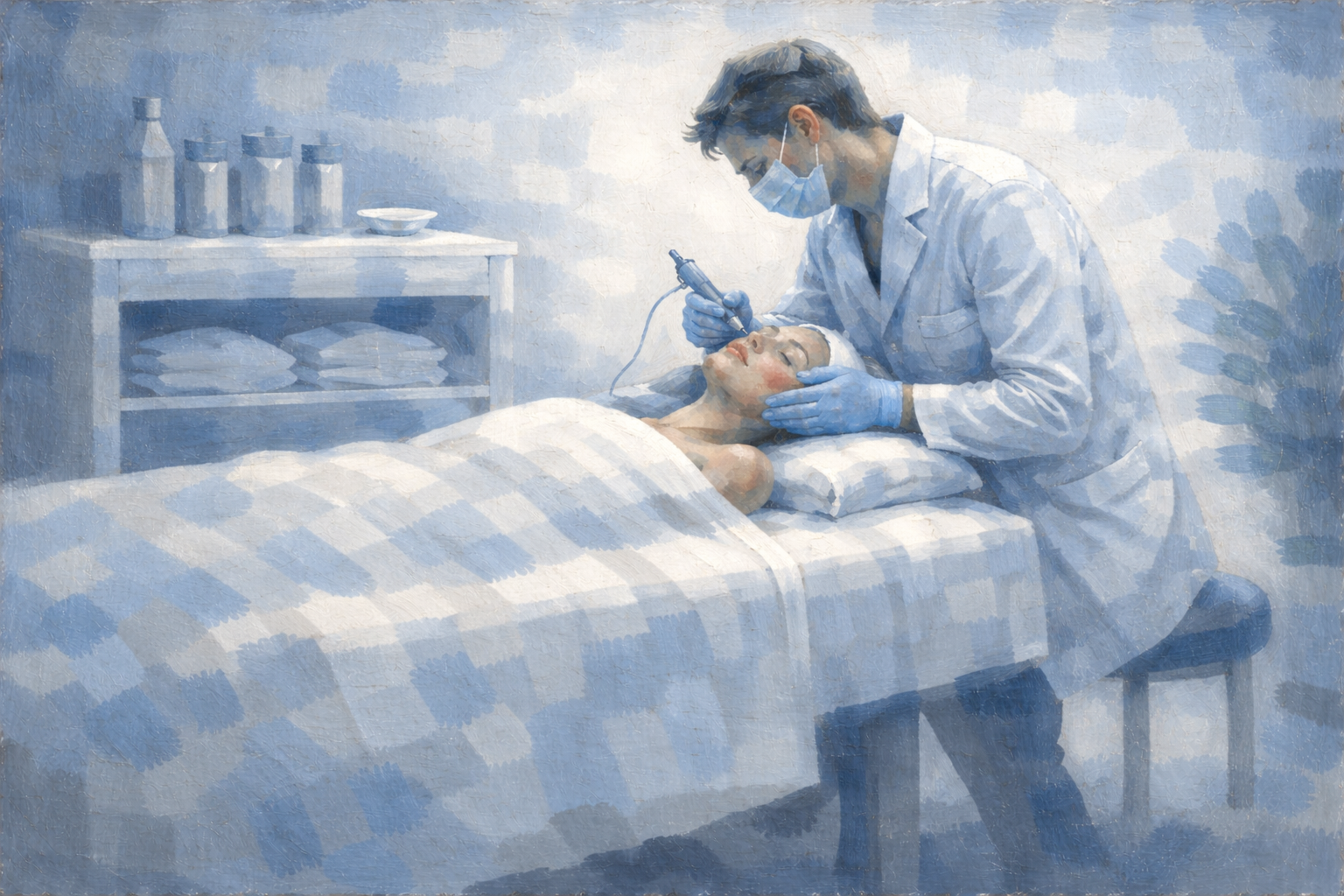

~ What Is Microneedling? ~
The Science Behind the Treatment
Microneedling uses a medical-grade automated pen to create thousands of precisely controlled micro-punctures in the skin. These tiny channels do two powerful things:
Trigger the body's own wound healing cascade, stimulating the production of new collagen and elastin from within, and
Dramatically increase the skin's ability to absorb and utilize topical therapeutic agents.
Like fractionated lasers, microneedling preserves most of the skin’s outer layer. This means minimal downtime, a lower risk of post-inflammatory hyperpigmentation (PIH), and suitability across all skin tones and types — including skin of color, where laser-based treatments carry meaningful risk.
Collagen remodeling continues for up to 2 years following a single treatment session, with studies demonstrating increases in dermal density and improvements in skin elasticity within weeks of treatment. It is a genuine investment in your skin's architecture.


The Dērm Boutique Difference
Why the Provider Is Matters

Microneedling is one of the most technique-dependent procedures in aesthetic medicine.
The depth of needle penetration, the speed of the device, the number of passes, the topicals applied — every variable influences the outcome. Performed incorrectly, even well-intentioned treatment can result in uneven texture, hyperpigmentation, or in rare cases with manual rollers, a pattern of scarring known as "tram-track" effect.
This is why at the Dērm Boutique, microneedling is never delegated. Dr. Lanier personally performs every treatment personally — based on your individual skin biology and goals. The difference between a surgical-level understanding of skin anatomy and a technician following a protocol is not subtle.

What Microneedling Can Address…
-
By thickening the dermis and restoring elastin fibers, microneedling softens fine lines, improves skin firmness, and reduces the cumulative effects of sun damage. Even modest needle depths of 0.5–1.0mm are sufficient to stimulate meaningful collagen production for anti-aging purposes.
-
The mechanical disruption of fibrotic scar tissue, combined with new collagen deposition, visibly reduces the depth and texture of rolling and boxcar scars. Clinical studies report 50–75% improvement in scar visibility after a series of treatments.
-
Uneven tone, enlarged pores, dullness, and rough texture all respond well to a consistent series of treatments, as the normalization of the collagen-elastin matrix creates a smoother, more luminous surface.
-
Often overlooked in skin rejuvenation planning, these areas respond exceptionally well and benefit from the same collagen-stimulating effects as facial treatment.
Microneedling: at a glance
-
Between 45-90 minutes including numbing.
-
Topical numbing cream
-
Typically 24–48 hours of redness; most patients return to normal activity the following day.
-
For optimal results, 3–6 sessions spaced apart by 4–6 weeks.
-
Results begin 2–4 weeks after treatment
-
Full results in 3–6 months (collagen remodeling continues for up to 24 months).
-
Microneedling can be combined with many other treatments including BroadBand Light (aka BBL or IPL), Botox, and fillers.
Keep in mind this is general information about a typical or usual experience. Individual experiences can vary.

Amplifying Your Results
Treatment Add-Ons & Combinations
Microneedling pairs exceptionally well with several complementary treatments and topicals. The micro-channels created during treatment dramatically increase the skin's absorption capacity — making the window immediately post-treatment a uniquely powerful opportunity to deliver active ingredients deeper than they could otherwise penetrate.
Exosome & Growth Factor Therapy — The most advanced post-treatment combination available. Exosome-powered regenerative serums and growth factor proteins applied immediately after microneedling work synergistically with the skin's healing cascade — accelerating cellular renewal, visibly reducing recovery time, and meaningfully amplifying collagen production beyond what microneedling alone achieves.
BroadBand Light (BBL) — For patients addressing both texture and tone simultaneously, incorporating BBL into a treatment plan targets pigmentation, redness, and structural aging through complementary mechanisms — treating what microneedling cannot, and vice versa.

Preparing & Protecting: Pre- & PostCare
Before your treatment:
For two to four weeks prior, a regimen of topical retinoids and antioxidants can improve the baseline health of the dermis and enhance your response to treatment. These actives should be discontinued 3-7 days before your appointment to prevent excess sensitivity.
Avoid blood-thinning supplements (fish oil, Vitamin E) for one week prior, and arrive with a clean face free of makeup.
After your treatment:
In the first 24 hours, keep the skin simple — a gentle cleanser and pure hyaluronic acid to hydrate without irritation. As the inflammatory phase passes, growth factor or peptide serums can be introduced to support the skin's repair.
Avoid retinoids, exfoliating acids, and chemical peels for at least one to two weeks post-treatment.
Sun protection is non-negotiable for a minimum of two weeks, as newly forming skin is highly susceptible to UV damage.

Is Microneedling Right for You?
Candidacy & Contraindications
Microneedling is appropriate for most adults in good general health seeking improvement in skin texture, tone, scarring, or signs of aging. It is one of the safest options available for patients with darker skin tones, where the risk of heat-based pigmentation complications makes laser resurfacing a less suitable choice.
Treatment should be postponed if you have an active skin infection, open cold sores, inflammatory acne, or a fever.
A history of herpes simplex/cold sores can be safely managed with antiviral preventative medicine prescribed in advance.
Patients with compromised immune systems, bleeding disorders, or those on anticoagulant therapy require individualized evaluation.
The question of isotretinoin (Accutane) and microneedling is nuanced — emerging evidence suggests the traditional six-month waiting period may be more conservative than necessary, though many practitioners maintain a one-to-six month window. This is a conversation Dr. Lanier will have directly with you during your consultation.

Common Questions: FAQ
-
A topical numbing cream is applied before treatment, making most patients comfortable throughout. Standard microneedling is generally well-tolerated; RF microneedling involves a higher level of pain and discomfort.
-
Most patients see meaningful improvement after three sessions. For more advanced scarring or photoaging, four to six sessions spaced four to six weeks apart is a typical protocol. Maintenance sessions once or twice annually help preserve and extend results.
-
Yes, microneedling (without RF, radio frequency energy) is one of the safest skin rejuvenation options for patients with darker Fitzpatrick skin types precisely because it does not involve heat. The risk of post-inflammatory hyperpigmentation, while not zero, is meaningfully lower than with laser-based alternatives.
-
At-home rollers reach a maximum depth of 0.25–0.5mm — sufficient to mildly enhance serum absorption, but incapable of reaching the reticular dermis where meaningful collagen remodeling occurs.
Professional medical-grade devices reach deeper and deliver needles vertically with precision. Home rollers move in a circular motion that can laterally tear tissue, increasing risk of scarring and infection. They are not equivalent treatments.
-
Outcomes in microneedling are highly technique-dependent. Needle depth, number of passes, treatment zones, and post-treatment protocol selection all require clinical judgment — and the consequences of getting it wrong can include uneven texture, prolonged pigmentation changes, or scarring. Having a double-board-certified surgeon with deep anatomical expertise perform every treatment is a true asset.