Sunscreen: a complete guide
Dr. Brock Lanier, MD, FACS | OncoPlastic Surgery in Newport Beach
Why is sunscreen so important?
The sun’s UV rays can both burn your skin & age it faster. Sunscreen protects against both of these, and prevents skin cancers from forming.
Consistent, daily sun protection should be the bedrock to any skincare strategy.
Basically, yes… sunscreen is the answer that we’ve been looking for, & it’s been here the whole time. In a sense it is sort of the Fountain of Youth.
Fewer burns. Less aging. Cancer prevention.


UVA and UVB are both “ultraviolet” rays, but…
Ultraviolet A rays have a slightly longer wavelength, which lets them pass through the top layer to skin and hit the bottom layer - the dermis. They are responsible for long-term damage, both accelerated aging (such as wrinkles and loss of the skin’s elasticity) and they create brown spots (or sun spots) and increase the risk for skin cancers.
Ultraviolet B rays have a shorter wavelength, and so they hit the top layer of the skin - the epidermis. The UVB absorption causes short-term damage such as inflammation and burns.
UVA rays: Aging. UVB rays: Burns.

Mineral vs Chemical sunscreens
The two basic types of sunscreen are mineral (a.k.a. physical) and chemical (a.k.a. organic). They both protect your skin from UVA and UVB rays.

The mineral ones work simply by being a barrier and physically blocking the sun’s rays and its UVA+UVB from hitting your skin.
Unlike in the past, a lot of mineral sunscreens these days are invisible when you put them on, acting like an invisible shield bouncing away the damaging UV rays.

The chemical sunscreens work differently. When sunlight hits your skin, the chemical sunscreens convert the harmful UVA +UVB into teeny, tiny, microscopic amounts of heat - that just blow away in the air. So the sunlight energy is basically redirected in another form before it can damage the skin.
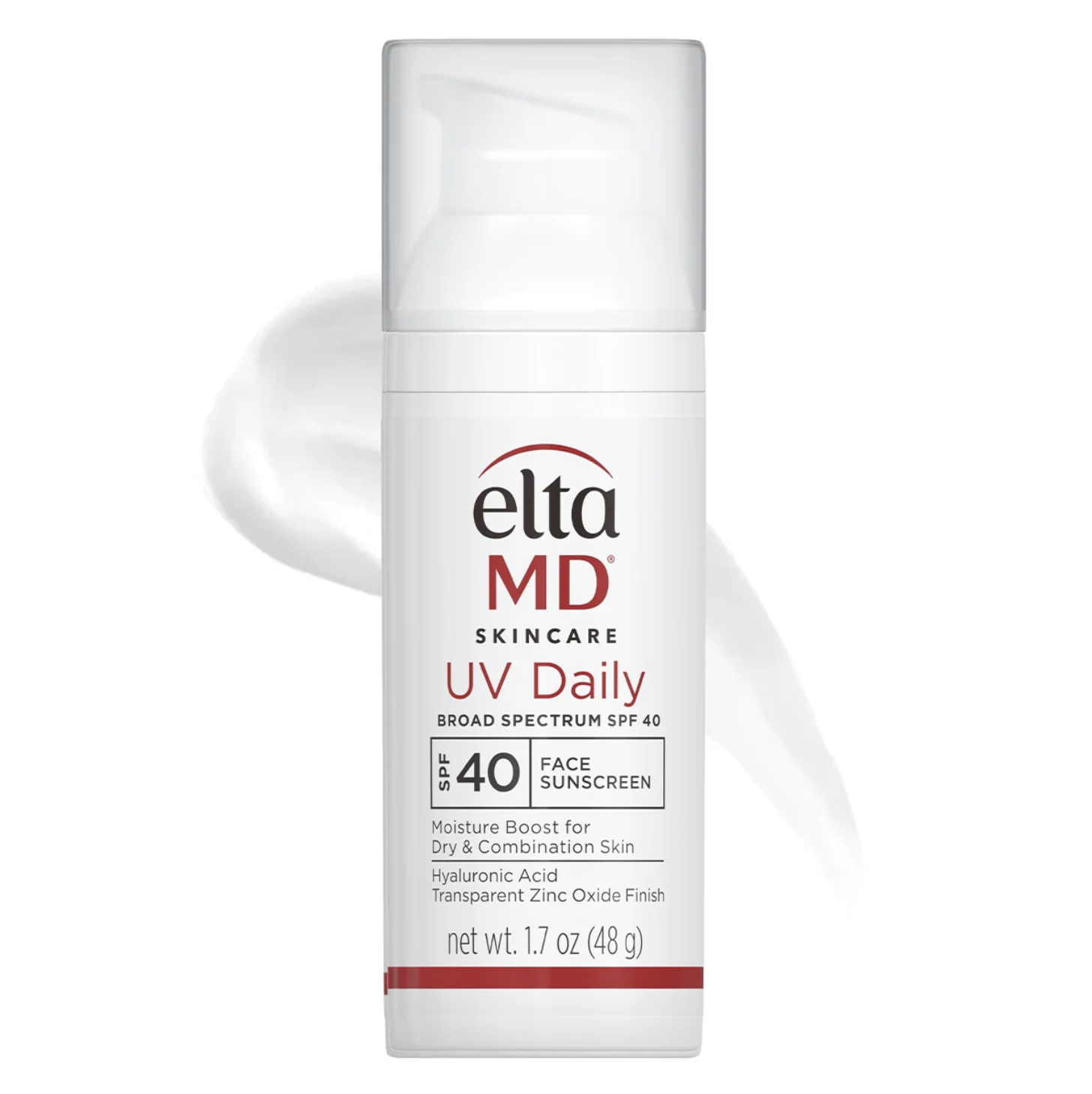
EltaMD UV Daily Face SPF
MSRP $41 $30.75
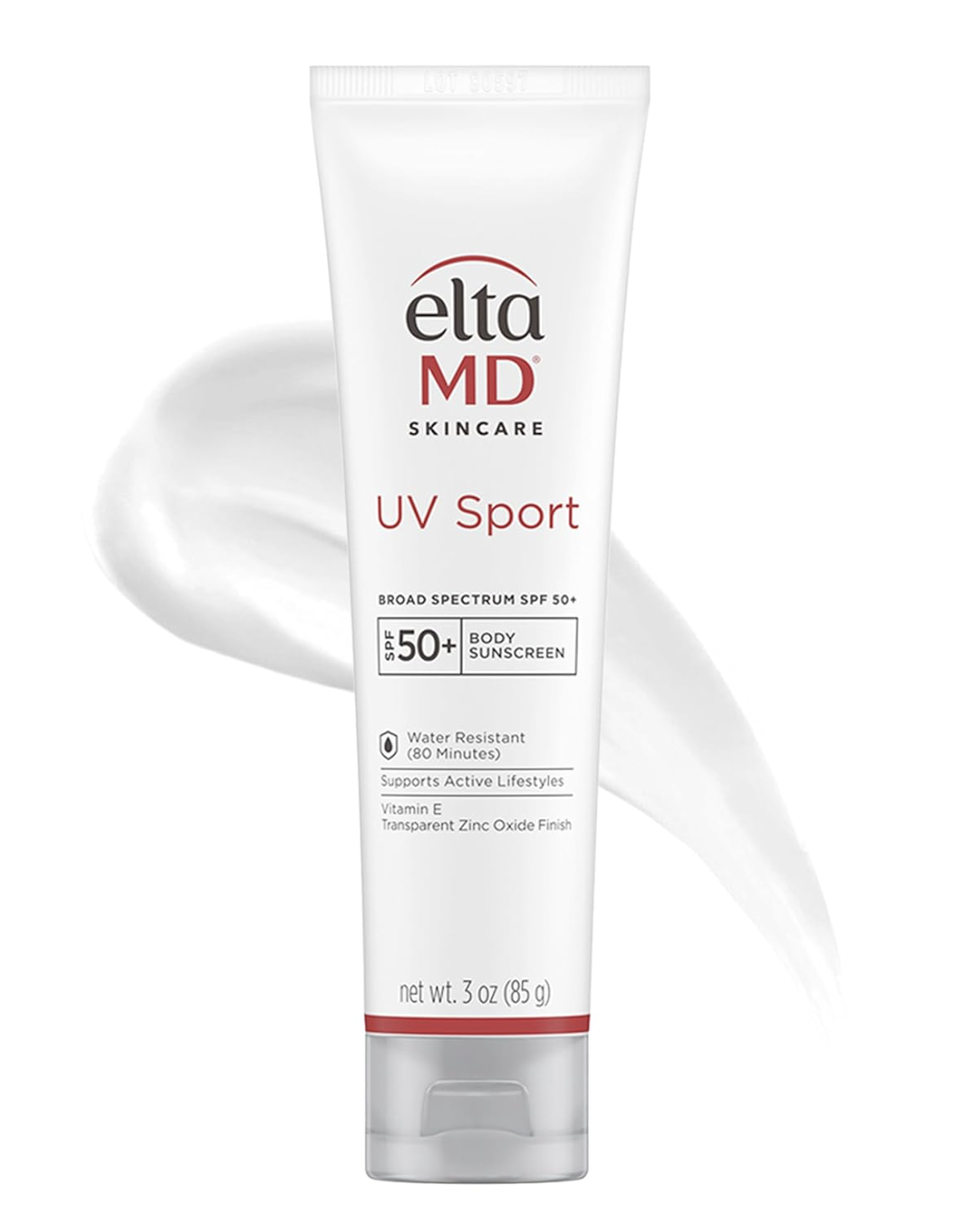
EltaMD UV Sport SPF
MSRP $32 $24
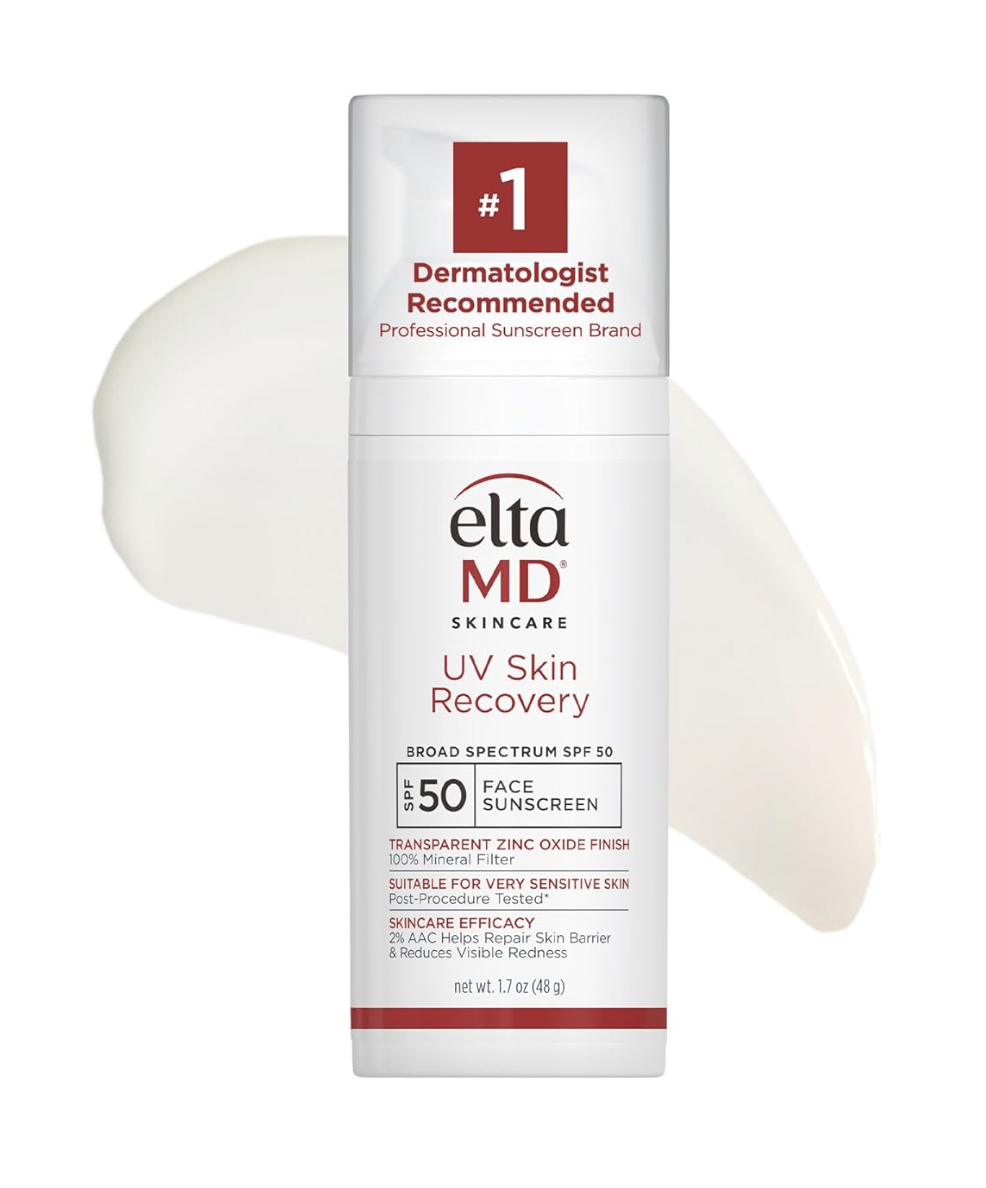
EltaMD UV Skin Recovery SPF
MSRP $50 $37.50
UV Clear: Designed specifically for acne-prone or sensitive skin, this hybrid blend formula (organic and mineral) contains niacinamide to calm redness and clear pores, finishing with a lightweight, oil-free texture that disappears into the skin.
UV Daily: Focused on hydration and anti-aging, also a hybrid blend SPF. It is slightly richer than UV Clear because it includes hyaluronic acid to lock in moisture, making it ideal for normal to dry skin types looking for a 2-in-1 moisturizer.
UV Recovery: Formulated for skin barrier repair, this is a mineral sunscreen using Zinc Oxide and Titanium Dioxide. It’s often recommended for post-procedure or compromised skin, using specialized amino acids to calm inflammation and strengthen the skin barrier.
UV Sport: Built for everyday or heavy-duty activity, this hybrid formula is highly water-resistant (up to 80 minutes) and designed not to sting your eyes when you sweat, making it a durable choice for the neck, decolletage, hands, and rest of the body.
SoCal OncoPlastic Surgery | Newport Beach, California
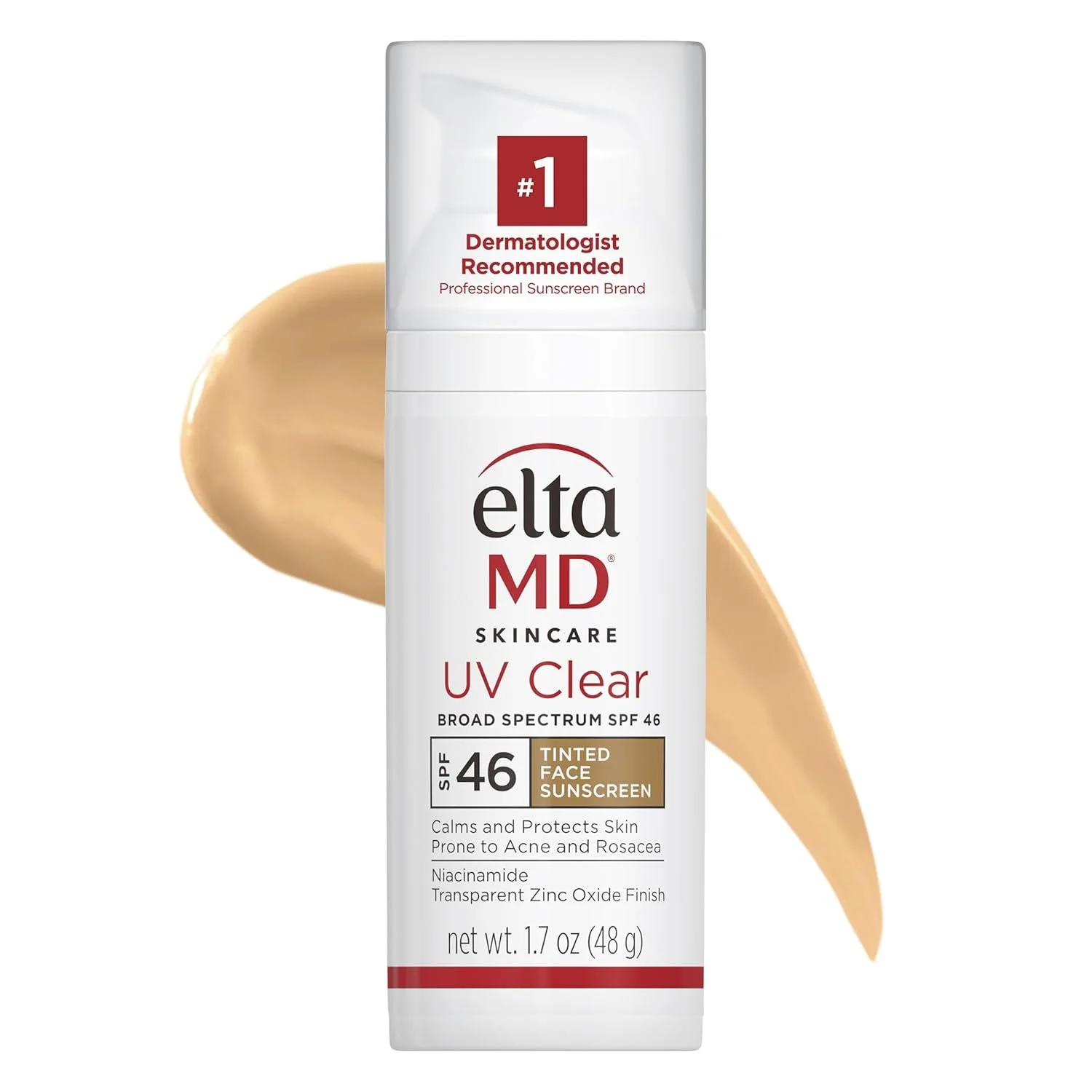
EltaMD UV Clear Face SPF
(tinted and untinted available)
MSRP $47 $35.25
Preferred Sunscreens
25% less money burn

see also: NY Times | Wirecutter

How much sunscreen should you put on?
And how often should you re-apply it?
The answer is a lot, more than you’re probably putting on.
Sunscreen is tested with a large amount to ensure it meets its SPF rating, whether it's SPF 15, 30, or 50. If you don’t apply enough, it may not protect you as labeled. For example, if your sunscreen says SPF 30, you might only be getting SPF 15 because you’re not putting enough on. This is the main reason it’s best to use at least SPF 30, to ensure you’re getting adequate protection, even if you don’t apply enough.
Put on enough sunscreen to completely cover the area (your face or arms) where it’s moist or wet for a little bit before the sunscreen soaks in.


You should also re-apply sunscreen more often than you think. A lot of times it will say on the bottle, 80 or 90 minutes. That’s an hour and half. They’re not kidding. Sunscreen is only good for that long - especially if you’re outside sweating or in the water.
Even if you're staying indoors, sunscreen should be part of your daily routine. I suggest applying it every morning, no matter how long you'll be inside. It's also good to reapply around lunchtime. In Southern California during summer, I recommend a third application in the afternoon, around 3 PM, since there are still several hours of sunlight. Adjust this based on your location and the length of the days.


How long do you need to you wear sunscreen in order to actually prevent skin cancer?
A study in Australia looked at this question (1). Researchers gave half of the people in a small town free sunscreen, only SPF 15. The rest of the people in the town could do whatever they want - wear sunscreen or not.
The results were really interesting. In less time than you might think - in about five years - there was a difference in the number of skin cancers. The people that were given free SPF 15 sunscreen had fewer melanoma skin cancers, and the ones that developed tended to be early stage melanomas.
In essence, if you think your life expectancy is more than 5 more years then effective sun protection is very important. That’s especially true if you have other risk factors for skin cancer - like a family history or if you take certain medications that increase your risk.
1. Green AC, Williams GM, et al. Reduced Melanoma After Regular Sunscreen Use. JCO 2011. PMID 21135266.